Kenijoje susiburia pasaulinė bulvių bendruomenė
Reflections from a first-time participant at the 13th World Potato Congress, and what global collaboration means for the wider potato value chain
By Navid Suthar | M S International, India
━━━━━━━━━━━━━━━━━━━━━━━━━━━━━━━━━━━━━━━━━
Darbo dienomis. Atsisakykite prenumeratos vienu spustelėjimu.
A first experience on a global stage
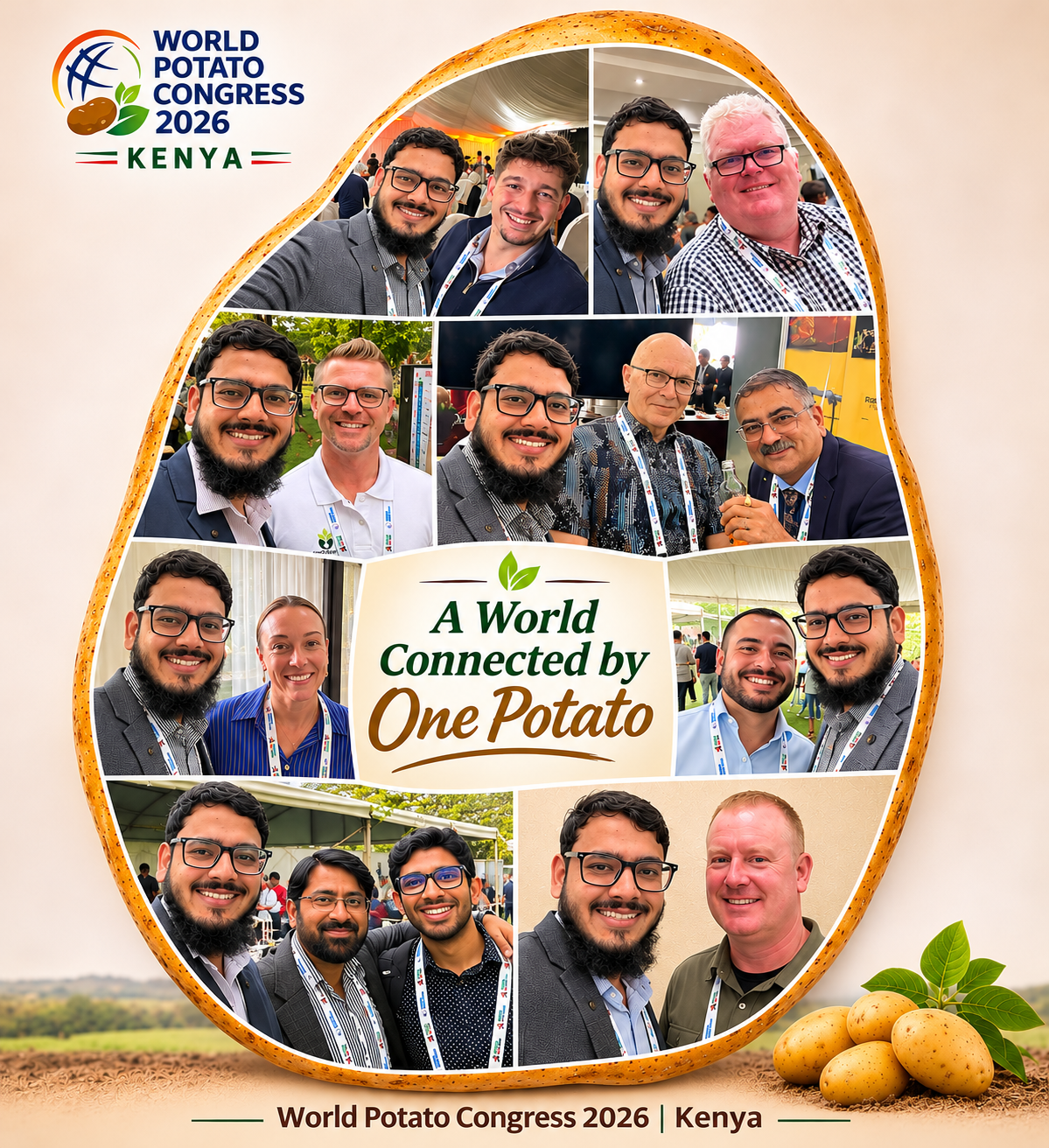
My first visit to the World Potato Congress was an especially meaningful experience. Attending the 13th edition in Naivasha, Kenya, gave me the opportunity to represent our family business, M S International, at an international gathering dedicated to a crop that connects millions of people and livelihoods around the world.
What struck me most was the breadth of the community brought together by the potato. Farmers, researchers, breeders, seed specialists, agricultural input providers, machinery companies, processors, traders, exporters and other industry professionals came together from different countries and professional backgrounds. They may approach the crop from different perspectives, but they share many of the same questions: how to improve productivity, strengthen quality, manage risk, develop markets and make the potato value chain more resilient.
It is easy to think of the potato simply as an agricultural commodity. The Congress offered a much wider view. The potato is connected to food security, nutrition, rural employment, processing, technology, international trade and business development. Seeing so many parts of this ecosystem represented in one place was a powerful introduction to the global potato community.
Why Kenya was a meaningful host
Held in Naivasha from 26 to 30 October 2026, the Congress brought the international potato community to East Africa. Hosting the event in Kenya gave delegates an opportunity not only to exchange international perspectives, but also to learn more about the region’s potato sector and its potential.
Kenya’s agricultural conditions, production systems and market development priorities provided a valuable context for discussions about the opportunities and constraints facing potato growers. The setting also helped underline the importance of adapting technologies and production practices to local conditions rather than assuming that one approach will work everywhere.
For me, the location made the experience more than a conference visit. It offered a chance to understand a potato-producing region first-hand and to connect global discussions with the realities of local farming.
Learning across the value chain
One of the most useful aspects of the Congress was the opportunity to meet people working at different stages of the potato value chain. My own professional perspective is closely connected to sourcing, supply, storage, quality and international markets. At the Congress, conversations with people involved in seed development, breeding, research, crop protection, agricultural inputs, machinery and processing helped broaden that perspective.
These parts of the industry are closely connected. Variety selection and seed quality influence crop performance. Growing conditions and crop management affect yield and the characteristics of the harvested potatoes. Storage and handling influence quality after harvest. For processors and buyers, those factors can ultimately determine whether a product meets the required specifications.
From a commercial perspective, this connection is particularly important. Processing customers may focus on dry matter, reducing sugars, frying colour, size and consistency, while table potato buyers may prioritise appearance, skin quality, sizing and shelf life. Meeting these requirements begins well before the product reaches a packing facility or export market.
The discussions reinforced the value of closer communication between breeders, growers, storage operators, processors and buyers. Better alignment across the chain can help reduce avoidable quality problems, improve consistency and create more dependable supply relationships.
Farmers Field Day: seeing the industry at work
A major highlight for me was the Farmers Field Day at FreshCrop in Mau Narok on 29 October. The field-based programme added a practical dimension to the conversations taking place during the Congress.
I had the opportunity to see potato varieties being demonstrated in Kenya, learn about agricultural inputs and crop management practices, and observe mechanisation technologies used in potato production. The displays and demonstrations provided a useful view of the tools and approaches being explored to support farming operations.
Equally important was the opportunity to speak with Kenyan farmers. Listening to their experiences and learning about the opportunities and challenges in their local potato sector helped put the wider industry discussions into perspective. It was a reminder that innovations matter most when they respond to the needs of farmers and can be applied effectively in local conditions.
The Field Day also highlighted the value of bringing farmers and the wider industry together. Practical demonstrations can make technical ideas easier to understand, while direct conversations allow farmers to share what works, what does not and where further support is needed.
A view from Indian potato trade
Representing M S International, an Indian family business involved in sourcing and supplying table potatoes and processing varieties, I was particularly interested in how developments in production and technology connect with the requirements of domestic and international markets.
India has a substantial potato production base and a growing ecosystem of growers, cold-storage operators, processors, traders and exporters. At the same time, customer requirements differ considerably by market and end use. A variety suited to one application may not be suitable for another, and quality expectations can vary between fresh markets and processing customers.
Our experience in potato supply has shown that reliable trade depends on more than availability. It requires suitable varieties, careful grading and handling, appropriate storage, consistency against customer specifications and dependable logistics. The Congress conversations helped reinforce how improvements upstream can support better outcomes downstream.
International platforms are valuable because they allow businesses to compare experiences, understand changing priorities in different markets and develop relationships with people who may approach similar challenges from another perspective.
Collaboration will shape the next chapter
The Congress left me with a strong impression of how much the global potato industry can gain from collaboration. Challenges such as climate variability, water availability, seed quality, pest and disease pressure, production costs, post-harvest losses and supply-chain efficiency are not confined to one country.
Solutions will need to be practical and locally relevant, but the knowledge behind them can be shared internationally. Research partnerships, technology exchange, stronger links between growers and buyers, and open discussion between industry participants can all contribute to a more resilient potato sector.
For someone attending the World Potato Congress for the first time, the greatest value was not limited to the presentations or the exhibition areas. It was the combination of new knowledge, field observations and conversations with people working across the industry. I returned with a wider understanding of the global potato ecosystem, valuable new connections and a stronger appreciation of the role that collaboration plays in its development.
I would like to thank the World Potato Congress team, the National Potato Council of Kenya and everyone involved in organising the event. The Congress created an important opportunity for the international potato community to meet, exchange ideas and strengthen relationships.
A humble crop brought people from around the world to Kenya. The challenge and opportunity now is to turn those connections into continued learning, practical cooperation and progress across the potato value chain.
Apie Autorius:
Navid Suthar is associated with M S International, an Indian family-owned agricultural business with a legacy dating back to 1960. The company sources and supplies table potatoes and processing varieties for domestic and international markets. His work and interests span international potato trade, sourcing, quality requirements and agricultural supply chains, with a focus on building relationships across the global potato industry.